

Introduction
Salmonellosis is an infectious disease caused by bacteria of the genus Salmonella, belonging to the family Enterobacteriaceae. It affects a wide range of animal species (cattle, poultry, horses, dogs, cats, reptiles) and humans, making it a significant zoonosis. The disease ranges from asymptomatic carriage to severe systemic infection, posing health and economic risks in veterinary practice.
- Genus: Salmonella
- Family: Enterobacteriaceae
- Species: Over 2,500 serovars identified (e.g., S. Typhimurium, S. Enteritidis).
Morphology and Characteristics of Salmonella
- Gram-negative bacilli (rod-shaped).
- Motile due to peritrichous flagella (except S. Gallinarum).
- Facultative anaerobes, able to survive in intestinal and extra-intestinal environments.
- Non-spore forming, but highly resistant in moist conditions.
- Grow readily on routine culture media (MacConkey, SS agar).
- Produce hydrogen sulfide (H₂S) in triple sugar iron agar.
Resistance
- Survive weeks in water, feces, soil, and contaminated environments.
- Resistant to freezing but killed by pasteurization and most disinfectants (formalin, phenols, hypochlorites).
- Sensitive to heat at 60°C for 15–20 minutes and to direct sunlight.
Transmission and Epidemiology
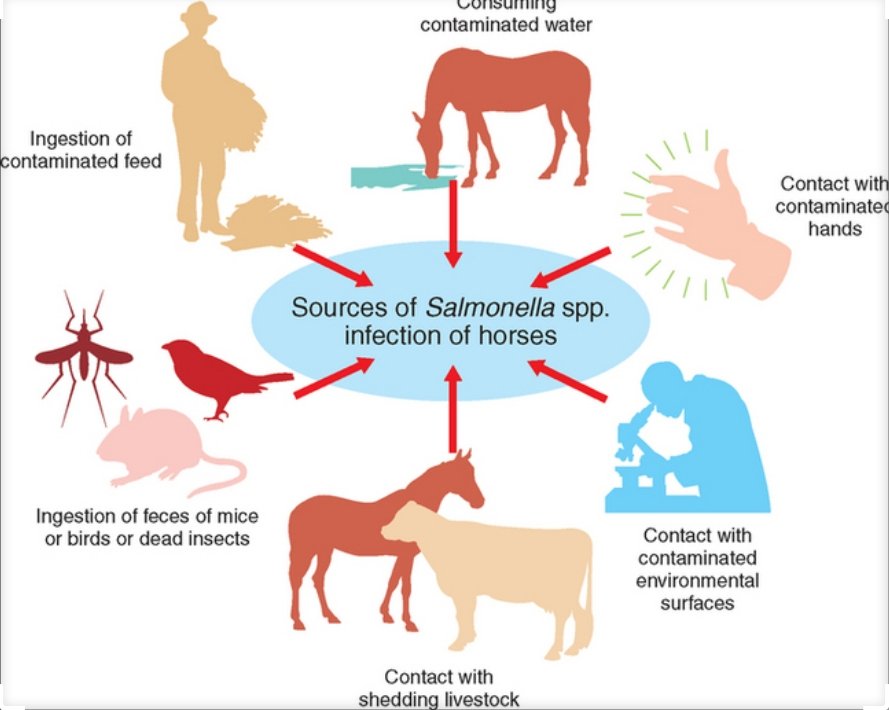
Salmonellosis is transmitted mainly via the fecal–oral route:
- Ingestion of contaminated food, water, or feed.
- Contact with infected animals or asymptomatic carriers.
- Contaminated equipment, bedding, or environment.
- Vertical transmission (from hen to egg in poultry).
Zoonotic importance: Humans can acquire infection from contaminated milk, eggs, meat, or direct animal contact. This makes control at the veterinary level essential.
Pathogenicity and Clinical Signs
After ingestion, Salmonella invades the intestinal epithelium, survives intracellularly in macrophages, and spreads to lymph nodes, liver, and spleen. The clinical outcome depends on host immunity, bacterial strain, and infective dose.
In animals:
- Cattle: Fever, diarrhea (sometimes bloody), abortion in pregnant cows.
- Poultry: Drop in egg production, diarrhea, septicemia, sudden death in chicks.
- Horses: Acute colitis, fever, diarrhea, endotoxemia.
- Dogs and cats: Vomiting, diarrhea, anorexia.
- Reptiles: Often asymptomatic carriers, dangerous for human transmission.
In humans:
- Gastroenteritis (nausea, vomiting, diarrhea, abdominal pain).
- Typhoid-like systemic infection in severe cases.
Incubation Period
- Usually 6–72 hours post ingestion.
- Duration of illness: 2–7 days in mild cases; longer in systemic or complicated cases.
Laboratory Diagnosis
Diagnosis is essential for confirmation and outbreak control. Methods include:
- Bacteriological culture:
- Isolation from feces, blood, or tissues on selective media (SS agar, XLD agar).
- Biochemical identification:
- H₂S production, sugar fermentation tests.
- Serotyping:
- Using specific antisera against O (somatic) and H (flagellar) antigens.
- Molecular detection:
- PCR-based methods for rapid and sensitive detection.
- Serology (ELISA):
- Useful in flock or herd surveillance.
Prevention and Control
- Hygiene and sanitation: Regular disinfection of housing, equipment, and food storage.
- Biosecurity: Prevent entry of infected animals, rodents, and contaminated feed.
- Vaccination:
- Poultry and cattle vaccines are available and effective in reducing disease incidence.
- Responsible antibiotic use: To avoid antimicrobial resistance.
- Public health education: Hand hygiene after handling animals, avoiding consumption of raw milk/eggs.
Treatment
- Supportive therapy: Rehydration, electrolyte replacement in diarrheic animals.
- Antibiotics: Only under veterinary guidance, as resistance is a major concern (fluoroquinolones, cephalosporins, trimethoprim-sulfonamides in severe cases).
- Probiotics and prebiotics: Help restore gut flora and reduce recurrence.
Importance for Veterinary and Public Health
Salmonellosis is a One Health concern, bridging veterinary and human medicine. Early detection and control in animals reduce zoonotic transmission and safeguard food safety.
At Dr. Boudi Widad Veterinary Clinic, we offer:
- Early diagnosis with laboratory confirmation.
- Effective treatment protocols tailored to the animal’s condition.
- Vaccination programs for prevention in farms.
- Awareness campaigns for pet owners and farmers to limit zoonotic spread.
Protecting animal health means protecting human health — controlling Salmonellosis in animals reduces outbreaks in people.