

Toxoplasmosis is an infectious disease caused by the protozoan Toxoplasma gondii. It is one of the most widespread parasitic infections of warm-blooded animals and humans worldwide. Although many infections are asymptomatic in otherwise healthy hosts, T. gondii infection can produce severe disease in fetuses (congenital toxoplasmosis), in immunocompromised people, and occasionally in debilitated animals — which makes veterinary diagnosis, treatment, and prevention essential for both animal and public health. cdc.gov+1
Agent, Classification & Morphology
- Agent: Toxoplasma gondii, an obligate intracellular protozoan parasite (Apicomplexa).
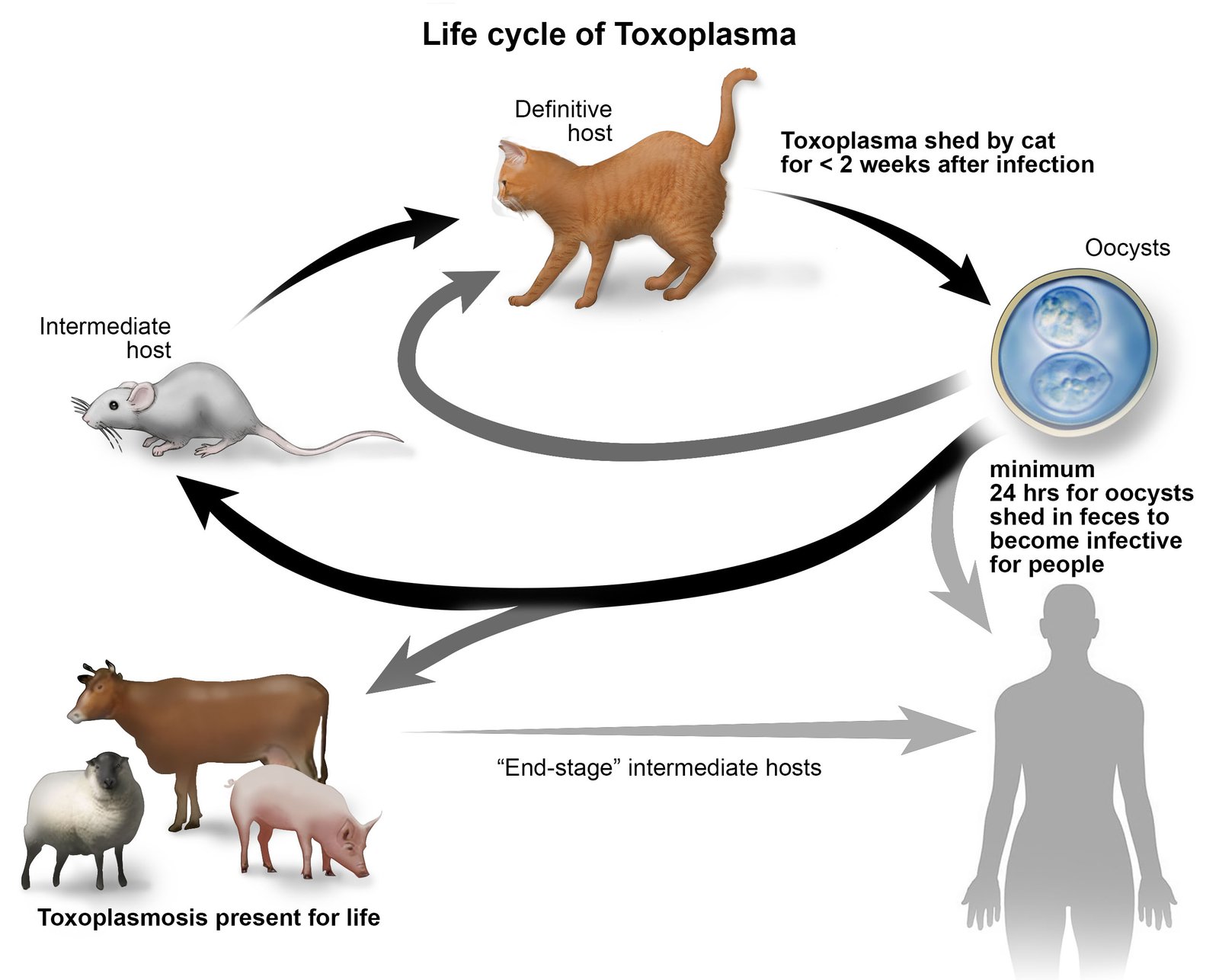
- Hosts: Felids (domestic and wild cats) are the definitive hosts where sexual reproduction occurs and oocysts are shed. Many other warm-blooded animals (livestock, birds, rodents, humans) serve as intermediate hosts, harboring tissue cysts. merckvetmanual.com+1
The parasite exists in three infective stages: rapidly dividing tachyzoites (acute stage), slowly dividing bradyzoites within tissue cysts (chronic stage), and sporozoites inside environmentally resistant oocysts shed in cat feces. merckvetmanual.com+1
Life Cycle & Environmental Resistance
Cats shed millions of unsporulated oocysts in feces for a short period (typically 1–3 weeks) after primary infection; oocysts sporulate in the environment (1–5 days) and become infectious. Tissue cysts in meat remain infective through cooking/processing unless appropriately destroyed by heat or freezing. Oocysts are hardy in moist soil and can contaminate water, fruit, and vegetables. merckmanuals.com+1
Transmission Routes (to animals and humans)
- Ingestion of sporulated oocysts from contaminated soil, water, raw fruits/vegetables, or handling cat litter.
- Ingestion of tissue cysts in undercooked or raw meat (sheep, pork, game).
- Transplacental transmission of tachyzoites from acutely infected pregnant females to the fetus (congenital toxoplasmosis).
- Less commonly: blood transfusion or organ transplantation. cdc.gov+1
These routes explain why both pet-related exposures and food/environmental risks are important for prevention. cdc.gov
Pathogenesis
After ingestion, tachyzoites invade intestinal epithelium and disseminate via blood and lymph to many tissues (brain, retina, muscle), where they form tissue cysts (bradyzoites). In pregnant hosts, tachyzoites can cross the placenta and infect the fetus. In immunocompetent hosts the immune response usually contains acute infection and tissue cysts persist lifelong, with potential reactivation if immunity wanes. merckmanuals.com+1
Clinical Presentation — Animals
- Cats: Most naturally infected cats are asymptomatic. Clinical disease (especially in kittens or immunosuppressed cats) may include fever, lethargy, anorexia, respiratory signs, diarrhea, ocular disease (uveitis, chorioretinitis), neurological signs (seizures, ataxia), or generalized multi-organ disease. merckvetmanual.com+1
- Livestock & other animals: May show abortion, neonatal illness, or reduced productivity depending on species (important in small ruminants and pigs). merckmanuals.com
Clinical Presentation — Humans & High-Risk Groups
- Immunocompetent adults: Often asymptomatic or mild flu-like illness (lymphadenopathy, myalgias).
- Pregnant women / congenital infection: Primary maternal infection during pregnancy can cause miscarriage, stillbirth, or severe congenital defects (hydrocephalus, intracranial calcifications, chorioretinitis) in the fetus — risk and severity depend on timing of maternal infection. NCBI+1
- Immunocompromised patients (e.g., AIDS): Reactivation may produce life-threatening encephalitis, chorioretinitis, and systemic disease. merckmanuals.com
Diagnosis
- Serology (IgG, IgM): Widely used to detect exposure and to help distinguish acute vs past infection (interpretation in pregnancy requires paired testing or avidity assays). cdc.gov+1
- Molecular tests (PCR): Detect T. gondii DNA in amniotic fluid, blood, CSF, or tissue — important for confirmation of congenital or severe infection. cdc.gov
- Histopathology / tissue biopsy: Identification of tachyzoites or bradyzoite cysts in infected tissues; useful in animals and severe human disease. merckmanuals.com
Treatment (Humans & Animals)
- Humans: Standard therapy for active disease commonly includes pyrimethamine + sulfadiazine plus folinic acid (to reduce marrow toxicity). For pregnant women, treatment choices differ by gestational age (e.g., spiramycin is used in some settings to reduce fetal transmission; pyrimethamine combinations are used when fetal infection is documented). Management must be coordinated with obstetrics/infectious-disease specialists. merckmanuals.com+1
- Cats and other animals: Clindamycin is the treatment of choice for clinical feline toxoplasmosis; supportive care and treatment duration depend on clinical signs and severity. In food-producing animals, control focuses on prevention because treatment options are limited and food-safety implications exist. merckvetmanual.com+1
Prevention & Control — Practical Recommendations
- Food safety: Cook meat thoroughly (internal temperatures that inactivate tissue cysts), freeze meat when appropriate, wash fruits and vegetables. academic.oup.com
- Cat-related measures: Pregnant women and immunocompromised persons should avoid cleaning litter boxes when possible; if unavoidable, use gloves and wash hands thoroughly. Keep cats indoors, do not feed raw meat, and prevent hunting. Note that cats typically shed oocysts only for a short period after first infection. cdc.gov+1
- Environmental hygiene: Wash hands after gardening, wear gloves when handling soil, and prevent contamination of water supplies. cdc.gov
Public Health Significance
Toxoplasmosis is a leading cause of foodborne-related congenital infections and one of the most important parasitic zoonoses globally. Because infection can be silent yet produce catastrophic congenital outcomes or severe disease in immunosuppressed people, veterinary surveillance, responsible pet ownership, and targeted public-health measures are critical. Frontiers+1
How Dr. Boudi Widad’s Veterinary Clinic Can Help
At Dr. Boudi Widad Veterinary Clinic we provide a comprehensive, evidence-based approach to toxoplasmosis prevention, diagnosis, and management:
- Diagnostic services: serology (IgG/IgM), sample collection for PCR, and ocular/CSF/tissue testing when indicated. cdc.gov
- Medical treatment for animals: targeted therapy (e.g., clindamycin) and supportive care for clinically affected cats and other companion animals. merckvetmanual.com
- Pregnancy counseling & owner education: we advise pregnant clients and immunocompromised household members on concrete steps to reduce risk (litter-box hygiene, food safety, preventing cat hunting, and when to see a physician). cdc.gov+1
- Prevention programs: practical recommendations for feeding, housing (indoor living), and environmental hygiene to minimize oocyst exposure — plus coordination with human healthcare providers when zoonotic risk exists. cdc.gov
If you suspect your pet may be ill or if you are pregnant and concerned about exposure, contact our clinic immediately — we can test, treat, and provide tailored advice to protect both the animal and your family.
Selected References & Further Reading
- CDC — Toxoplasmosis: Causes, Prevention, and Risk Factors. cdc.gov+1
- Merck Veterinary Manual — Toxoplasmosis in Cats / Animals. merckvetmanual.com+1
- StatPearls / NCBI — Congenital Toxoplasmosis. NCBI
- Frontiers in Pediatrics — Congenital Toxoplasmosis: State of the Art (2022). Frontiers
- Jones JL, et al., Foodborne Toxoplasmosis (Clin Infect Dis 2012)