

Introduction
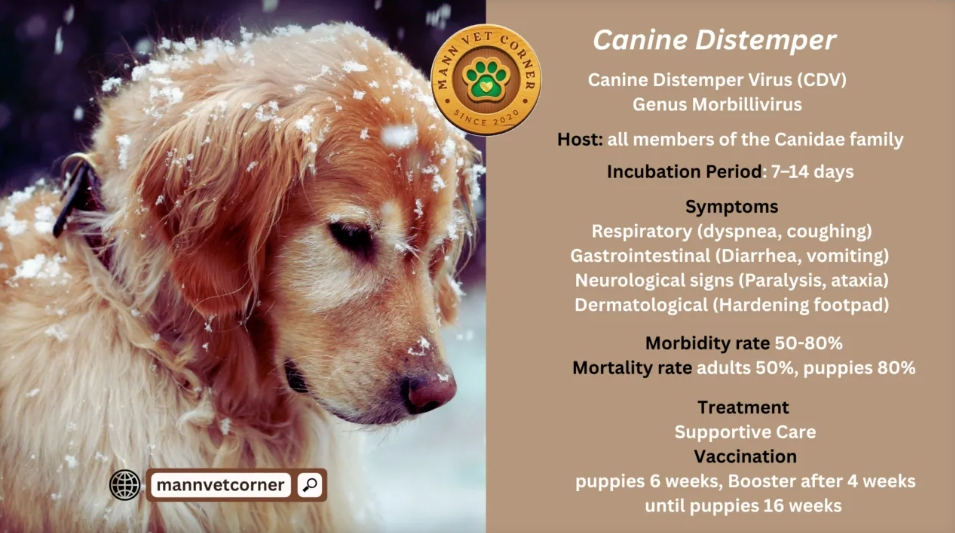
Canine distemper is an acute, highly contagious viral disease that affects dogs and a wide range of wild carnivores. It is a systemic infection that primarily attacks the respiratory, gastrointestinal and nervous systems and can produce severe, sometimes fatal, illness. Although vaccination has dramatically reduced incidence in well-managed populations, CDV remains an important cause of morbidity and mortality in unvaccinated dogs and in wildlife, and emerging viral variants can alter disease severity and host range. merckvetmanual.com+1
Causative Agent and Classification
- Family: Paramyxoviridae
- Genus: Morbillivirus
- Agent: Canine distemper virus (CDV) — an enveloped, single-stranded, negative-sense RNA virus closely related to measles virus (human) and rinderpest virus (ruminants). cabidigitallibrary.org+1
Morphology & Genome
CDV is an enveloped virus with pleomorphic to spherical particles (100–300 nm typical), containing a negative-sense single-stranded RNA genome that encodes structural proteins including the fusion (F) and hemagglutinin (H) glycoproteins, matrix (M), nucleoprotein (N), phosphoprotein (P) and polymerase (L). The H and F proteins mediate cell attachment and fusion, and are key determinants of tropism and immunogenicity. pmc.ncbi.nlm.nih.gov
Environmental Stability / Resistance
As an enveloped virus, CDV is relatively labile in the environment compared with non-enveloped enteric pathogens: it is inactivated by common disinfectants, detergents, heat, and desiccation. Nevertheless, close direct contact, aerosolized secretions and fomites in contaminated environments facilitate transmission in kennels and shelters. merckvetmanual.com+1
Transmission & Pathogenesis
- Transmission: CDV spreads primarily via respiratory droplets and direct contact with infected secretions (nasal, ocular, respiratory) from symptomatic and subclinical animals. Indirect transmission via contaminated bedding or equipment is possible in high-density settings. Wild carnivores (foxes, raccoons, skunks, mustelids) serve as reservoirs and can transmit virus to domestic dogs. merckvetmanual.com+1
- Pathogenesis: After inhalation, CDV replicates initially in the respiratory epithelium and local lymphoid tissues, causing a primary viremia and widespread dissemination to epithelial surfaces (respiratory and gastrointestinal tracts) and to the central nervous system (CNS) in some cases. Immunosuppression (lymphoid depletion) is common and predisposes to secondary bacterial infections. Neurologic disease can appear concurrently or weeks to months after systemic signs due to viral persistence or delayed immune-mediated damage. pmc.ncbi.nlm.nih.gov+1
Clinical Signs
Clinical presentation is variable — from mild/subclinical infections to severe, multisystemic disease. Typical disease progression includes:
- Prodromal/acute phase: fever, lethargy, anorexia.
- Respiratory/GI phase: serous to mucopurulent ocular/nasal discharge, coughing, dyspnea, vomiting, diarrhea — secondary bacterial pneumonia is frequent.
- Dermatologic manifestations: footpad hyperkeratosis (“hardpad” in some cases) and hyperkeratotic nasal planum.
- Neurologic phase: myoclonus (facial and limb twitching), ataxia, paresis/paralysis, seizures, behavioral changes; neurologic signs may be delayed and can be progressive or static. vet.cornell.edu+1
Age & risk: Young, unvaccinated puppies and immunologically naïve animals are most severely affected; stress, co-infection and poor nutrition worsen outcome. msdvetmanual.com
Pathology
Lesions reflect multisystemic infection: bronchointerstitial pneumonia, lymphoid depletion (thymus, spleen), enteritis with mucosal necrosis, and nonsuppurative encephalitis with gliosis and demyelination in the CNS. Histopathology may show characteristic neuronal and glial changes depending on disease stage. Viral antigen can be demonstrated in affected tissues. ijarbs.com+1
Diagnosis
Diagnosis combines clinical suspicion, laboratory testing and, where needed, post-mortem confirmation. Useful diagnostic methods include:
- RT-PCR: detection of viral RNA from nasal/ocular swabs, whole blood, CSF, urine or tissues — sensitive and commonly used.
- Serology: paired sera showing rising antibody titers can support diagnosis; single high titers may indicate exposure or vaccination.
- Antigen detection / immunofluorescence: in tissues or smears.
- Virus isolation: in cell culture (less frequently used clinically).
Because clinical signs overlap with other respiratory and neurologic diseases, laboratory confirmation is important — particularly in shelters and outbreak situations.
Treatment
No antiviral drug is universally licensed or consistently curative for CDV; management is primarily supportive and aims to: maintain hydration and nutrition, control secondary bacterial infections with appropriate antibiotics, manage seizures/myoclonus (anticonvulsants), provide respiratory support and meticulous nursing care. Experimental approaches (e.g., immune serum, antivirals) have been explored in case reports or research settings but are not standard therapy. Prognosis depends on severity, organ involvement (especially CNS), and rapid initiation of supportive care.
Prevention & Vaccination
Vaccination is the cornerstone of prevention. Modified-live virus (MLV) and recombinant vaccines (e.g., canarypox-vectored) induce protective immunity when given according to established puppy and adult schedules. Key points:
- Puppy schedule: serial vaccinations starting commonly at 6–8 weeks and repeated every 3–4 weeks until ~16 weeks (to overcome maternal antibody interference).
- Adult dogs: booster protocols depend on vaccine type and regional guidelines; core vaccine status should be maintained.
- Herd/shelter immunity: high vaccination coverage in dog populations (including shelter intake protocols) reduces outbreaks and spillover to wildlife.
Public Health and Wildlife Considerations
Canine distemper is not considered a human pathogen, but its wide host range among carnivores makes it a major conservation and public-health concern (indirectly) because outbreaks can devastate wildlife populations and complicate disease control in domestic animals. Surveillance and vaccination campaigns in domestic dogs are important for conservation of susceptible wild carnivores.
Laboratory Safety & Infection Control (Clinical Settings)
Because CDV spreads readily in kennel and shelter environments, strict isolation of suspect animals, use of appropriate disinfectants (enveloped-virus effective), and workflow measures (separate exam rooms, PPE, dedicated staff) are necessary to prevent nosocomial spread. Environmental decontamination and quarantine policies are essential during outbreaks.
Our Clinic’s Capabilities — How We Diagnose, Treat, and Prevent CDV
At Dr. Boudi Widad Veterinary Clinic we provide an integrated approach to canine distemper:
- Vaccination programs (puppy series and adult boosters, including recombinant vaccine options where indicated) to ensure individual and community protection. merckvetmanual.com
- Rapid diagnostic testing (sample collection for RT-PCR and serology) to confirm suspected cases and guide cluster management. ksvdl.org
- Supportive inpatient care for affected dogs: IV fluids, nutritional support, broad-spectrum antibiotics for secondary infections, anticonvulsant therapy for neurologic signs, oxygen therapy when needed, and intensive nursing to improve survival chances. merckvetmanual.com+1
- Outbreak control advice for multi-pet households, boarding facilities and shelters, including isolation protocols, disinfection, and vaccination strategies. Shelter Medicine
Early veterinary attention and vaccination are the most effective measures to prevent disease and its severe complications. If you suspect distemper in your dog (fever, discharge, cough, neurologic signs), call us immediately — we can evaluate, test, and provide supportive treatment and guidance to protect other animals in your care.
References (selected authoritative sources)
Merck Veterinary Manual — Canine Distemper. merckvetmanual.com
Cornell University Veterinary Resources — Canine Distemper clinical facts. vet.cornell.edu
Rivera-Martínez A, et al. Review: Canine distemper virus — recent overview (2024). pmc.ncbi.nlm.nih.gov
AVMA — Canine distemper guidance for pet owners. avma.org
KSVDB / diagnostic reviews — Canine distemper diagnostics. ksvdl.org